1. Timely notice
The contractual notice must be issued before or during the adverse weather event — not after. The 14-day forecast gives you the lead time to act. The draft notice is ready to review and issue within minutes of identifying the risk.
For project managers
The window to protect your contractual position closes the moment adverse weather passes. Construction Weather gives project managers a 14-day forecast benchmarked against historical norms, early-warning notice drafts ready for issue, and the contemporaneous records that underpin any future delay claim.

Contractual notice obligations
Under NEC, JCT and FIDIC contracts, adverse weather notice obligations must typically be met before or during the event — not retrospectively. A well-timed early-warning notice preserves contractual entitlement to an extension of time and protects the contractor's position before the employer or engineer applies liquidated damages.
Construction Weather generates an editable early-warning notice draft from your project location and forecast data. The draft is structured around the contract type selected, ready for review and issue by the project team.
Keeping the programme defensible
A successful weather-related EOT or delay claim rests on three things. Construction Weather is designed to support all three from day one of the project — not as a retrospective exercise when the claim is already being contested.
The contractual notice must be issued before or during the adverse weather event — not after. The 14-day forecast gives you the lead time to act. The draft notice is ready to review and issue within minutes of identifying the risk.
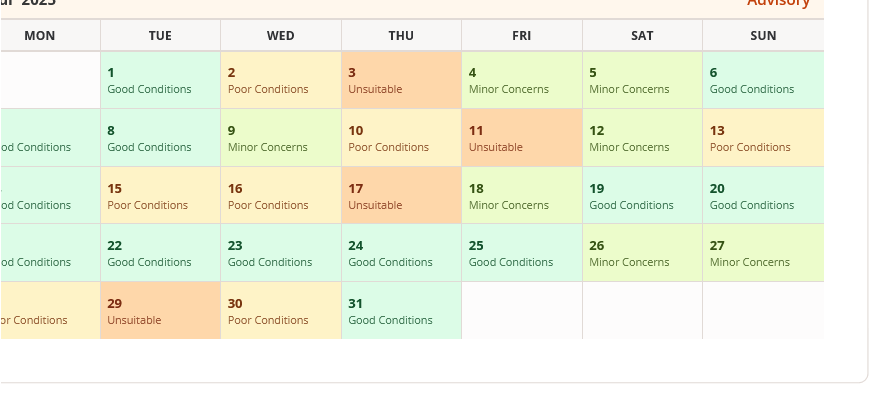
Daily advisory and forecast records stored against your project location create a contemporaneous log of what was forecast, what arrived, and which trades were affected. Records created at the time are the most persuasive evidence — reconstructions created months later are not.
An extension of time for adverse weather typically requires the event to exceed the norm for the location and time of year. The platform benchmarks forecast and actual conditions against the five- and ten-year historical average so you can identify events that cross that threshold.
Platform outputs support project decision-making and document preparation. Contractual entitlement, programme analysis and legal advice remain outside the platform's scope — seek qualified advice before issuing formal notices or claims.
Building the delay record
The early-warning notice is the start, not the end. As the project progresses, Construction Weather maintains a running record of conditions against your location. When the QS begins compiling the time-extension claim, the advisory history — showing which days were flagged, for which trades, at what severity — is available to support the evidence pack.
This integrated approach means the project manager, QS and commercial team are all working from the same location-based dataset, not reconciling different sources months after the event.
Construction Weather is built for every role in the project chain. The same location and project data that powers the project manager's early-warning drafts also feeds the site manager's daily advisory and the QS's time-extension evidence pack.
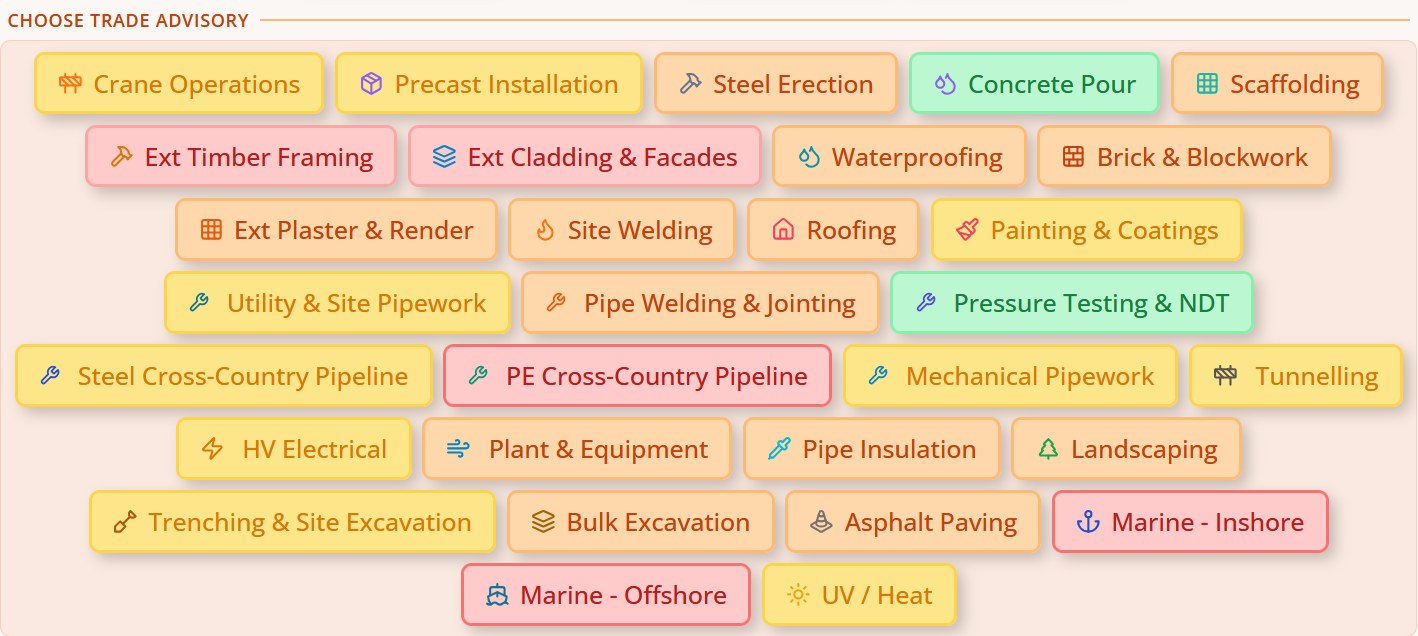
Trade-specific Green, Amber and Red advisory grading across 29 construction trades — so the crew is only committed when conditions allow.
Site manager guide →Benchmark adverse months against historical data, identify qualifying events and frame the evidence around the contract clause — NEC, JCT or FIDIC.
QS guide →What an early-warning notice is, when it must be issued, what it must contain and how it protects the contractor's programme under NEC and JCT contracts.
Read the guide →Common Questions
Under NEC3 and NEC4 contracts, an early-warning notice is a contractual obligation to notify the project manager or employer of any matter that could affect the programme, cost or quality — including forecast adverse weather. Under JCT contracts, a similar notice requirement applies before claiming a relevant event. Issuing the notice in advance is a condition of entitlement to a programme extension in most standard form contracts.
The platform uses your project location, the selected contract type and the forecast data to generate an editable Word document draft. The draft is structured around the notice requirements of the selected contract form. Your project team reviews and issues the document — the platform generates the starting point, not the final notice.
The trade advisory forecast covers 14 days ahead. The first three days are generally reliable. Days 8–14 are indicative — useful for advance programme awareness and early identification of potentially significant conditions, not for precise operational decisions.
An extension of time for adverse weather typically requires conditions to exceed the norm for the location and time of year — what the contract would describe as "exceptionally adverse" weather. The platform benchmarks actual or forecast conditions against the five- and ten-year historical average, providing the comparison data the claim needs.
No. The platform provides weather data, forecast context, historical benchmarks and draft documents for review. Determining contractual entitlement to an extension of time requires programme analysis, legal interpretation and qualified contractual advice — none of which the platform provides or substitutes for.
14-day forecast, early-warning notice drafts and contemporaneous weather records — for project managers across the full project lifecycle.