Operation-specific weather risk

Construction weather graded by trade operation

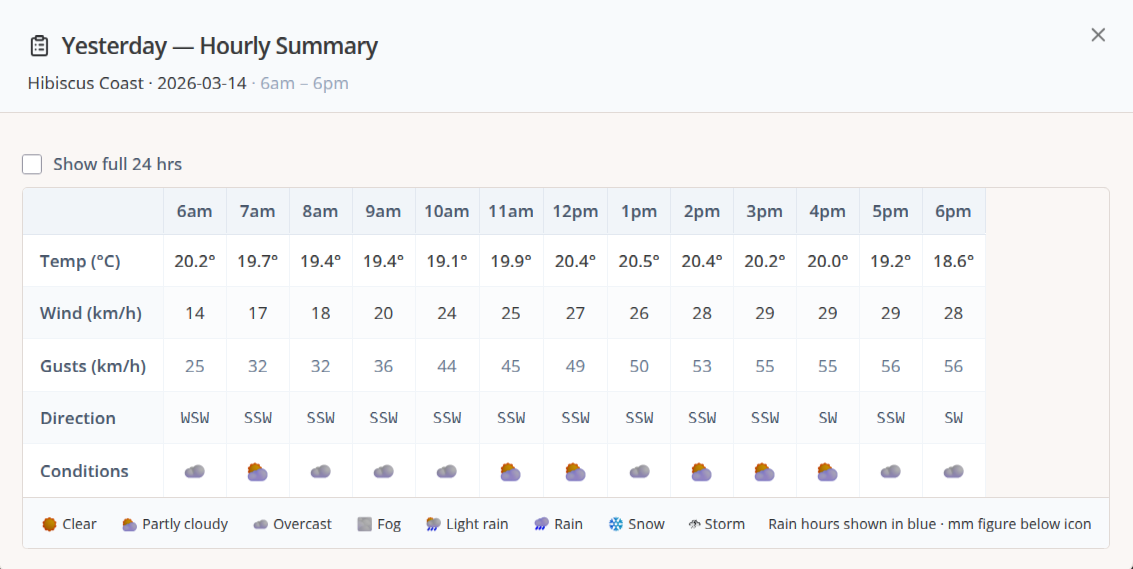
Rain, wind, temperature, humidity and dew point affect different construction activities in different ways. Construction Weather connects the forecast to the specific operation planned — with Green, Amber and Red risk grading, hourly detail and configurable alert thresholds for every trade.

Selection of construction trade operations available for weather advisories

Lifting and access

Crane, scaffold and work at height

Wind speed and gust conditions are the primary weather constraints for lifting operations and work at height. The relevant limits are set by crane manufacturers, scaffold standards and applicable regulations.

Crane and lifting operations

Primary parameters: Wind speed, gust speed

Maximum wind limits vary by crane type, configuration, working radius and suspended load, as specified in the manufacturer's load chart. Gusts can exceed mean wind speed significantly and are often the controlling condition. Amber advisories indicate conditions approaching common threshold ranges; Red indicates forecast conditions exceeding them.

Steel erection

Primary parameters: Wind speed, gusts, rain

Structural steel erection combines the lifting constraint with an additional slip and stability risk from rain on steel surfaces. Wind affects crane operations used to position sections, and gusts can make large panels and open sections difficult to control during placement.

Scaffold erection and alteration

Primary parameters: Wind speed, gusts

Scaffold erection and alteration is constrained by wind conditions referenced in applicable scaffold standards. High winds affect the structural loading on incomplete scaffold and create handling risks for tubes, boards and fittings during erection. Completed scaffolding has its own design wind load; erection is a separate and more sensitive condition.

Glazing and facade installation

Primary parameters: Wind speed, gusts, rain

Large glazing panels and facade units are sensitive to wind load during handling and installation. Suction lifting equipment has wind-speed limits, and rain affects surface handling and sealant application conditions around frame installations.

Demolition and deconstruction

Primary parameters: Wind speed, gusts

High-reach demolition operations and the handling of large structural elements are constrained by wind conditions in a similar way to crane operations. The uncontrolled release of material in demolition makes wind gust conditions particularly significant for planning purposes.

Tower crane and mast climber

Primary parameters: Wind speed, gusts

Tower cranes are typically more wind-sensitive than mobile cranes due to their fixed position and height. Operating limits are specified by the manufacturer and vary with jib configuration and loading. Mast climbers and construction hoists have their own wind operating limits specified by the manufacturer.

Concrete and masonry

Placement, curing and structural masonry

Temperature, rainfall, humidity and wind all affect concrete and masonry operations — sometimes in opposite directions. Cold delays curing; heat accelerates it. Both extremes create quality risk if unmanaged.

Concrete placement

Primary parameters: Rain (intensity), temperature (min/max), wind, humidity

Rain during a pour dilutes the mix and damages fresh surfaces. Cold temperatures (typically below 5°C) slow or stop hydration and risk frost damage to freshly placed concrete. High temperatures above 32°C reduce workability, accelerate setting and can cause early-age cracking. Wind accelerates surface evaporation and can cause plastic shrinkage cracking, particularly in thin slabs.

Concrete finishing and curing

Primary parameters: Rain, temperature, wind, humidity

Finishing operations require a weather window that allows the surface to be worked and protected before rain or extreme temperature conditions arrive. Curing is an extended condition — overnight low temperatures and the risk of frost during the curing period are relevant beyond the placement day. Construction Weather provides overnight low forecasts relevant to curing risk assessment.

Masonry and brickwork

Primary parameters: Rain, frost, temperature

Masonry mortar is sensitive to frost during setting. Most specifications reference minimum temperatures of around 2–4°C for laying mortar and require protection against frost during curing. Rain on freshly laid masonry can wash out mortar and cause staining. High winds affecting scaffold platforms above masonry operations are an additional consideration.

Precast and tilt-up concrete

Primary parameters: Wind, rain, temperature

Precast concrete panels combine the lifting constraint (wind limits for crane operations) with the placing constraint of fresh concrete if in-situ connections are involved. Tilt-up operations are particularly sensitive to wind load on large panel faces during the lift.

Grouting and screeding

Primary parameters: Temperature, rain, wind, humidity

Cementitious grouts and floor screeds share the temperature sensitivity of concrete but are often thinner and more vulnerable to rapid evaporation. Internal operations have some protection from rainfall but may still be affected by temperature if the building is not enclosed.

Post-tensioning and stressing

Primary parameters: Rain, temperature

Stressing operations are sensitive to the same conditions as concrete placement for the poured elements involved. Corrosion risk to exposed tendons is increased by rain and high humidity in the period between placement and grouting of ducts.

Welding and joining

Structural welding, pipeline and mechanical joining

Welding is highly sensitive to wind, humidity and temperature. The relevant limits are typically defined in the welding procedure specification (WPS) and the applicable code — such as API 1104, ASME Section IX, AWS D1.1 or BS EN ISO 15614.

Structural steel welding

Primary parameters: Wind speed, humidity, temperature, rain

Wind above a threshold — commonly 8 m/s for most open processes — disrupts the shielding gas or flux coverage and risks porosity, lack of fusion and other weld defects. Low ambient temperature affects preheat requirements specified in the WPS. High humidity and rain introduce moisture, creating hydrogen cracking risk in susceptible steels. The controlling limits are those in the project WPS and the applicable welding standard.

Pipeline welding

Primary parameters: Wind speed, humidity, temperature, rain

Pipeline welding under API 1104, ASME Section IX or equivalent is subject to the same environmental constraints as structural welding, with additional sensitivity to temperature variation along long linear project routes. Changes in ambient temperature over a pipeline corridor can affect preheat consistency. Construction Weather supports location-specific advisory grading at the relevant project coordinate.

Site welding and fabrication

Primary parameters: Wind speed, humidity, temperature

General site welding — connections, brackets, repairs and temporary works — shares the environmental constraints of structural welding. Where welding is performed at height or in exposed positions, wind conditions have a greater effect on shielding gas stability than in sheltered ground-level positions.

Mechanical and flanged joints

Primary parameters: Rain, temperature

Flanged and bolted mechanical joints for pipework and ductwork require dry, clean joint faces. Rain and humidity affect gasket performance and coating adhesion on bolt threads. Low temperatures affect the torque characteristics of fasteners and the performance of sealants used at joints.

Envelope and finishes

Roofing, cladding, waterproofing and applied coatings

Envelope and applied finish operations typically require specific dry, bounded weather windows. Humidity and dew point are as important as rainfall for many coating and waterproofing applications.

Roofing — felt, single-ply and metal

Primary parameters: Rain, wind, temperature

Roofing operations require dry conditions for membrane bonding and lap sealing. High winds create both a safety risk for operatives and a practical constraint for handling membrane rolls and metal panels. Most manufacturers specify minimum application temperatures for adhesives and sealants used in roofing systems.

Cladding and curtain walling

Primary parameters: Wind, rain

Cladding and curtain walling installation is constrained primarily by wind conditions affecting crane or MEWP-assisted panel handling, and by rain affecting sealant application at joints. Many curtain walling specifications reference maximum wind conditions for panel installation.

Waterproofing and membranes

Primary parameters: Rain, temperature, humidity

Liquid-applied waterproofing membranes require a dry, clean substrate and temperature above the manufacturer's specified minimum for application and curing. Sheet membranes require dry conditions for adhesive bonding and lap sealing. Humidity can affect the cure rate of polyurethane and similar systems.

External painting and applied coatings

Primary parameters: Humidity, dew point, temperature, rain, wind

Most coating specifications reference a maximum relative humidity — commonly 85% — and require the substrate temperature to be at least 3°C above the dew point to prevent condensation. Rain before coating affects substrate preparation. High wind accelerates solvent loss and affects spray application. Low temperatures extend drying time; some products cannot be applied below 5°C.

Blasting and surface preparation

Primary parameters: Humidity, dew point, wind, rain

Abrasive blasting to prepare steel surfaces requires low humidity conditions to prevent flash rusting between blasting and coating application. Most coating specifications require coating to be applied within a defined window after blasting — often four hours at low humidity — before the prepared surface re-oxidises. Dew point spread and forecast humidity conditions determine the achievable work window.

External render and plastering

Primary parameters: Rain, frost, temperature, wind, humidity

External render is sensitive to rain (which washes uncured material), frost (which damages fresh render during curing), high temperatures (which cause rapid drying and shrinkage cracking) and high wind (which accelerates surface drying unevenly). Most specifications reference minimum and maximum application temperatures and protection requirements against rain and frost.

External tiling and paving

Primary parameters: Rain, frost, temperature

External ceramic, stone and concrete tiling shares the temperature sensitivity of masonry. Frost during mortar curing can cause bond failure. Rain on freshly grouted joints before curing is complete causes washing and staining. Substrate and ambient temperature limits are typically referenced in the product specification.

Timber framing and joinery

Primary parameters: Rain, humidity, wind

Structural timber framing is vulnerable to moisture uptake during installation, before the building is enclosed. Prolonged exposure to rain or high humidity can cause dimensional movement, joint loosening, mould growth and, over extended periods, decay in untreated sections. Wind creates a safety and handling risk for large panels and roof trusses during erection.
Groundworks and civil engineering

Earthworks, piling, drainage and highways

Civil and groundworks operations are often the most directly affected by rainfall. Ground conditions change rapidly after significant rain and frost, making forward planning particularly valuable for earthmoving and piling programmes.

Earthworks and bulk excavation

Primary parameters: Rain, frost, temperature

Earthworks are directly affected by rainfall through ground saturation, trafficability, slope stability and compaction performance. Heavy rain can render plant unable to operate on a formation or embankment. Frost hardens the surface but creates heave risk and affects compaction of fill material. Construction Weather provides rainfall intensity and frost forecasts relevant to earthworks planning.

Piling operations

Primary parameters: Rain, wind (for tall rigs)

Bored and CFA piling is affected by ground water conditions following sustained rainfall. Tall piling rigs — particularly rotary rigs with extended kelly bars — may be wind-sensitive in exposed conditions. Rain affects access and site trafficability for plant movement and material deliveries to piling positions.

Drainage and underground services

Primary parameters: Rain, frost

Drainage installation is disrupted by rainfall raising groundwater levels in open trenches and affecting bedding and haunching conditions. Frost affects the workability of bedding materials and granular fill. Trench stability is reduced by heavy rain in cohesive soils and granular conditions.

Road surfacing and asphalt

Primary parameters: Rain, temperature (ambient and substrate), wind

Hot mix asphalt requires minimum ambient and substrate temperatures for placement and compaction — typically around 3–5°C — before the material cools below its compaction temperature. Rain on a hot-laid surface damages the texture and can cause delamination. Cold wind accelerates material cooling and reduces the compaction window.

Concrete road and hardstanding

Primary parameters: Rain, temperature, wind

Concrete road slabs and large hardstandings combine the constraints of concrete placement (rain, temperature, wind-driven plastic shrinkage) with the additional finishing requirement of a large horizontal surface that must be protected before rain and temperature extremes arrive.

Landscaping and planting

Primary parameters: Rain, frost, temperature, wind

Soft landscaping, topsoil reinstatement and planting operations require trafficable ground conditions. Frost affects topsoil placement and is damaging to newly planted material. Prolonged dry and hot conditions affect establishment of newly planted vegetation. High winds affect the stability of staked trees and large shrubs immediately after planting.

Configurable alert thresholds

Set your own alert conditions for any operation

Every trade has different weather limits — and within a trade, different projects, specifications and method statements will define different thresholds. Construction Weather includes a customisable notifications system that allows users to set project-specific alert conditions for the weather parameters that matter to their work.

  • Set wind speed and gust alert levels specific to your crane configuration or scaffold design
  • Configure rainfall intensity alerts for planned concrete pours or coating application windows
  • Set temperature alerts for concrete curing, render, mortar or coating application thresholds
  • Configure humidity and dew point alerts for painting, blasting and waterproofing operations
  • Receive notifications ahead of forecast conditions — not after they have arrived
Configure your alerts →
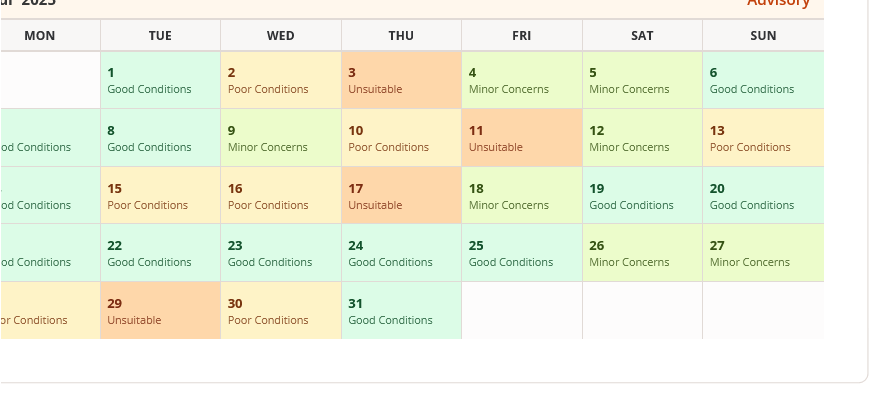
Construction Weather advisory calendar showing daily risk grading across forecast period
The advisory calendar provides a forward view of risk grading across the forecast period — useful for planning operations around forecast Green windows.

Frequently asked questions — weather and construction operations

What wind speed stops crane operations?

Maximum permissible wind speeds are specified by the crane manufacturer in the load chart and operating manual. Limits vary by crane type, configuration and load. Construction Weather grades crane operations by forecast wind and gust speed at the project location — Amber indicating conditions approaching common threshold ranges, Red indicating conditions that exceed them.

Can you lay concrete in the rain?

It depends on rainfall intensity, mix design and pour type. Light rain with protection in place may be manageable; steady rain on an open slab is generally not acceptable. Construction Weather grades concrete placement risk by forecast rainfall intensity, providing Amber and Red advisories when conditions require review or exceed normal advisory parameters.

What weather affects pipeline or structural steel welding?

Wind (above around 8 m/s for most open processes), low ambient temperature (affecting preheat per the WPS), and high humidity or rain (introducing moisture and hydrogen cracking risk) are the primary constraints. The controlling limits are those in the applicable welding procedure specification and standard — API 1104, ASME Section IX, AWS D1.1 or equivalent.

What humidity affects painting and coating application?

Most coating specifications set a maximum relative humidity of 85% and require substrate temperature to be at least 3°C above dew point to prevent condensation. Construction Weather grades coating and painting operations by forecast humidity, dew point spread, temperature and rain, providing an advisory for the planned application window.

Can you set custom weather alert thresholds for your project?

Yes. The notifications section in Construction Weather allows users to configure project-specific alert thresholds for wind speed, rainfall, temperature, humidity and other parameters — so alerts reflect the specific limits in your method statement, WPS or specification rather than generic defaults.

What temperature is too cold for concrete?

Most specifications reference a minimum placing temperature of around 5°C, though this varies by mix. Below this threshold, hydration slows significantly and fresh concrete is at risk of frost damage without heating and protection. Construction Weather provides temperature-based advisory grading covering overnight low forecasts relevant to curing risk.

Related features

Operation-specific advisories connect to the full weather-risk workflow — from tender planning through to EOT evidence.

Trade advisory forecast

14-day Green, Amber and Red grading for selected trade operations at any project location, with hourly detail for flagged days.

Early-warning notices

Generate an editable contractual early-warning notice from project and forecast data when adverse conditions are anticipated.

EOT weather evidence

Benchmark actual weather against historical data and identify qualifying events for extension-of-time review.

Tender weather planning

Estimate average unsuitable days per trade operation per project month using ten years of historical data.

Historical weather data

Retrieve and export dated weather records for any location — wind, rain, temperature, humidity and more.

Check the forecast for your trade operation

Search any project location, select your planned operation and review the advisory grading — free to use during the open beta.

Open the app